
Today is World Wildlife Day, a global reminder that protecting biodiversity requires innovation, collaboration and practical tools that work in the real world. Among the technologies quietly transforming conservation efforts is portable ultrasound. Once confined largely to hospitals and veterinary clinics, ultrasound systems are now travelling into rainforests, coastal waters, rescue centres and remote breeding facilities.
Lightweight, battery powered and capable of producing real time diagnostic images, portable ultrasound in wildlife conservation has become an indispensable, non invasive solution for understanding and protecting vulnerable species. It is safe, repeatable and does not rely on ionising radiation; for wildlife conservationists, this combination of safety and immediacy is invaluable.
Successful breeding programmes are essential for endangered species survival. Portable ultrasound allows conservation specialists to monitor follicle development, confirm pregnancy and assess egg or embryo viability without surgery or sedation in many cases.
For oviparous reptiles, eggs can be identified by their characteristic reflective outer shell. For ovoviviparous species, embryos can be counted and monitored within individual sacs. This ability to confirm pregnancy quickly informs habitat planning, nutritional support and release strategies.
In zoos, aquariums, sanctuaries and field settings, ultrasound supports rapid evaluation of internal organs and soft tissues. Liver condition, gastrointestinal abnormalities, reproductive disease and cardiac function can all be assessed without invasive procedures.
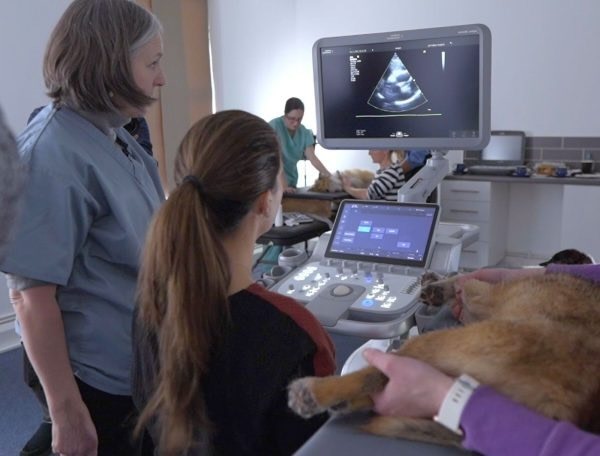
Because wildlife often experiences stress during handling, reducing examination time and avoiding unnecessary transport to veterinary facilities is crucial. Portable ultrasound enables point of care imaging in enclosures, rescue centres or directly in the field.
Marine ecosystems present unique challenges as traditional imaging modalities are often impractical underwater. Portable ultrasound, when paired with waterproof or protected probes, allows researchers to assess marine mammals, fish, sharks and even coral structures.
High pressure and salinity can enhance acoustic conduction, sometimes producing exceptionally clear images. This has opened new possibilities for studying marine anatomy and reef health in situ.
Conservation rarely happens in ideal clinical environments. Equipment must withstand humidity, heat, sand and unpredictable terrain. Modern portable systems are compact, robust and capable of operating for extended periods on battery power, making them ideal for remote locations.
At Portable Ultrasound Machines, we have explored the boundaries of marine ultrasound using systems such as the Vinno D6, the Apogee 1000 Lite and our ScanX Air wireless probe.
Using the Vinno D6 with a linear transducer, we captured detailed images of a crab within a fish tank, revealing internal anatomical structures with remarkable clarity. The Apogee 1000 Lite delivered high resolution imaging suitable for more detailed structural analysis.
The ScanX Air, with dual convex and linear transducers in a single probe, demonstrated impressive versatility. Unlike many wireless probes, it offers enhanced resolution while maintaining exceptional portability. Although not fully waterproof, when placed in a simple protective covering with ultrasound gel, it performs reliably in aquatic environments.
We also tested the Artemis system, featuring a waterproof curvilinear transducer with a wide footprint; ideal for scanning larger fish and marine species. These systems have shown how ultrasound can support assessment of coral integrity, identification of disease affected regions and evaluation of marine animal health without disrupting fragile ecosystems.
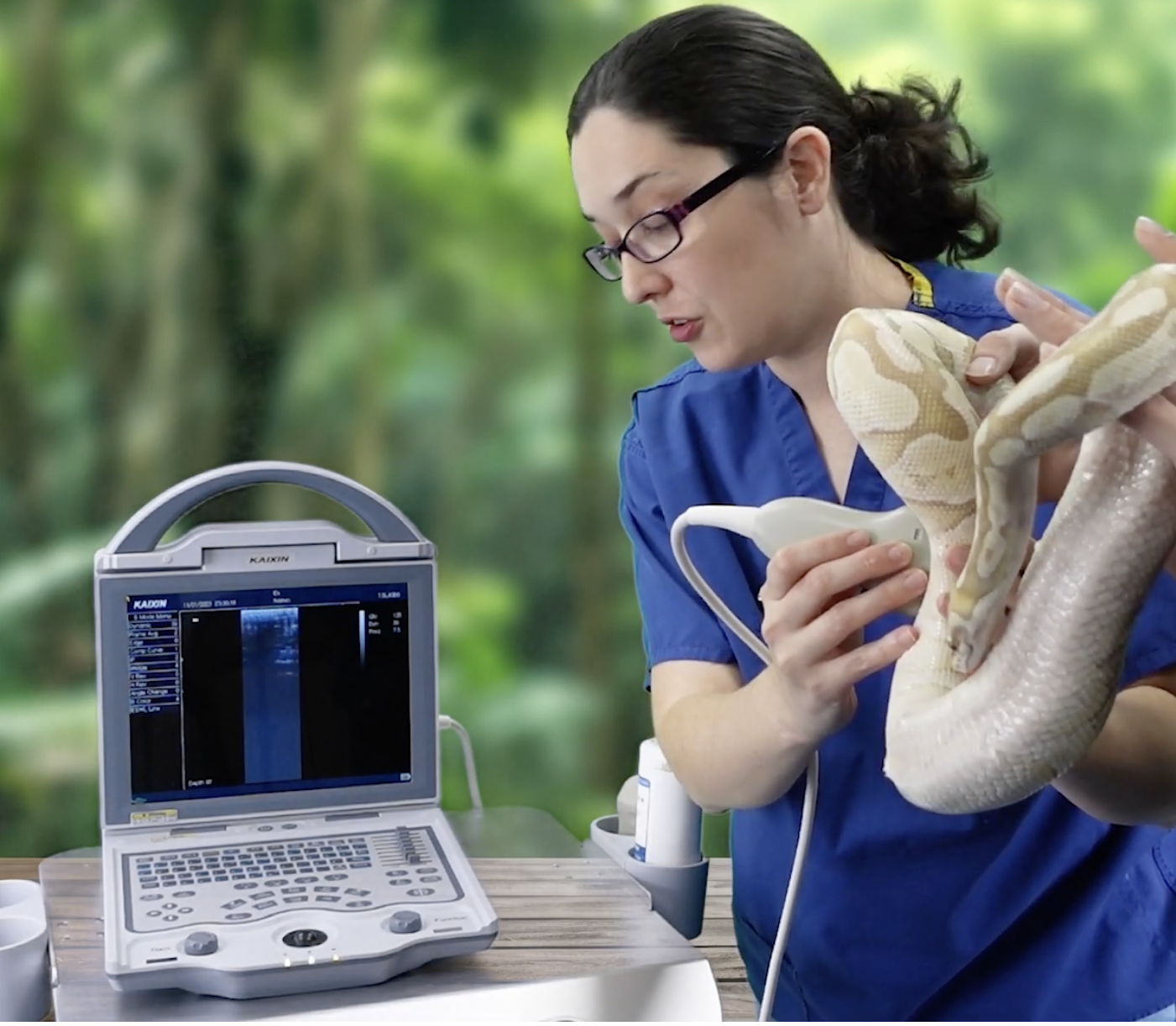
In the United States, respected herpetologist Doug Wynn has used our KX5600v and Apogee 1000 Lite systems to scan endangered snake species, including the Timber Rattlesnake, Eastern Massasauga Rattlesnake and Plains Garter Snake.
These ovoviviparous snakes give birth to live young. On ultrasound, each embryo appears curled within its own sac, making counting relatively straightforward. In one remarkable case, 27 embryos were identified.
While the KX5600v is more than sufficient for confirming pregnancy and identifying eggs, the Apogee 1000 Lite provides enhanced resolution. Using colour Doppler, embryonic heartbeats and blood flow were visualised in late term pregnancies, offering unprecedented insight into reptile development. Such information informs conservation strategies, improves understanding of reproductive biology and supports long term population monitoring.
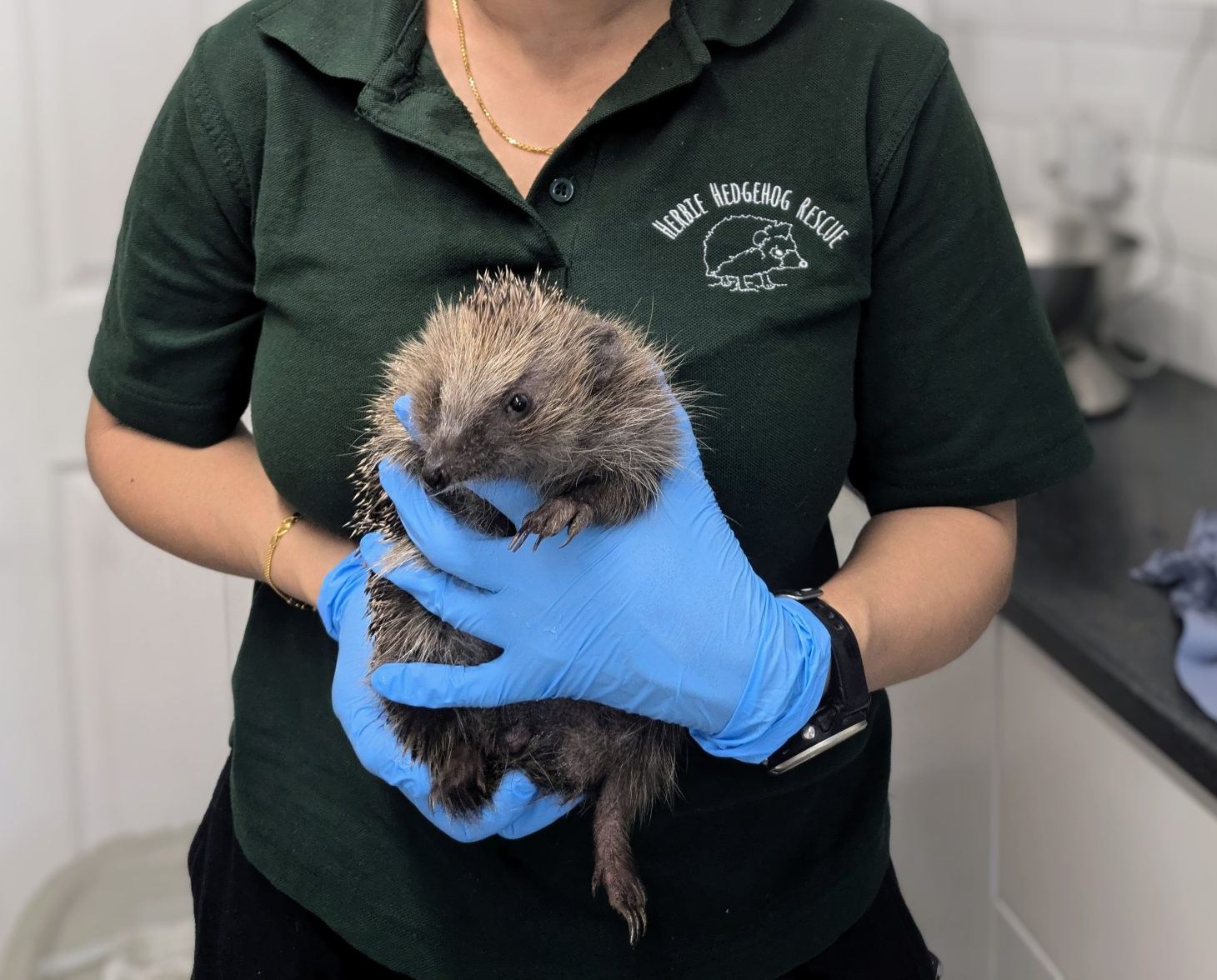
Closer to home, portable ultrasound has revolutionised care at Herbie Hedgehog Rescue in Berkshire. Founded by Shweta Saikumar, the sanctuary uses the ScanX system to assess pregnancy status in rescued hedgehogs upon arrival.
Knowing whether a female is pregnant influences enclosure size, medication choices and release timing. Avoiding unnecessary veterinary transport reduces stress, which is particularly important because hedgehogs perceive humans as predators.

Ultrasound at the rescue is not limited to pregnancy detection. It supports identification of pyometra, bladder stones, gastrointestinal abnormalities and cardiac enlargement associated with dilated cardiomyopathy. For a charity operating without government funding, having on site imaging capability reduces costs while significantly improving animal welfare.
Portable ultrasound in wildlife conservation represents a powerful convergence of technology and compassion. It reduces stress; provides immediate results; and enables repeated, non destructive monitoring over time.
As artificial intelligence tools are developed to assist with image interpretation and measurement, and as probe design continues to improve for specialist environments, the scope of wildlife ultrasound will only expand.
On this World Wildlife Day, it is worth recognising that conservation is not driven solely by fieldwork and policy. It is also advanced by practical, adaptable technologies that empower those working on the front lines. Portable ultrasound has proven itself to be one such technology: quiet, precise and transformative in the ongoing effort to protect the natural world.