

National Pet Month is the perfect time to reflect on the standard of care we offer the animals in our keeping, and for those working as paraprofessional scanners, it is an opportunity to consider what our clients are really looking for when they book a scan. Breeders and pet owners today are more informed than ever; they research carefully, ask searching questions, and expect a level of professionalism that matches the trust they are placing in you. Understanding what a discerning client values, and ensuring that your practice genuinely delivers it, is the foundation of a sustainable and respected scanning business.
From around 28 days post-mating, ultrasound gives breeders something they cannot get anywhere else: certainty. The ability to confirm whether a mating has been successful, and whether the pregnancy is viable, is enormously valuable to someone who has invested time, money, and emotional energy into a planned litter. From 30 days onwards, a well-trained scanner can not only confirm pregnancy but also assess foetal viability by looking for a heartbeat or movement in the unborn puppies or kittens.
For your client, that moment of confirmation is often deeply moving. It is also the starting point for a cascade of practical decisions: whelping arrangements, nutrition planning, veterinary appointments, and the logistics of preparing for a litter. When you provide a clear, confident, and well-informed result at that first scan, you are not just delivering a service. You are giving your client the foundation they need to plan everything that follows.
This is precisely why responsible scanners do not routinely offer scans before 30 days. Conception does not always occur on the day of mating, and dates can be off by a few days. Scanning too early risks producing an inconclusive result, which reflects poorly on you as a professional and leaves your client no better informed than before. A client who understands good scanning practice will recognise this boundary as a mark of quality, not a limitation.
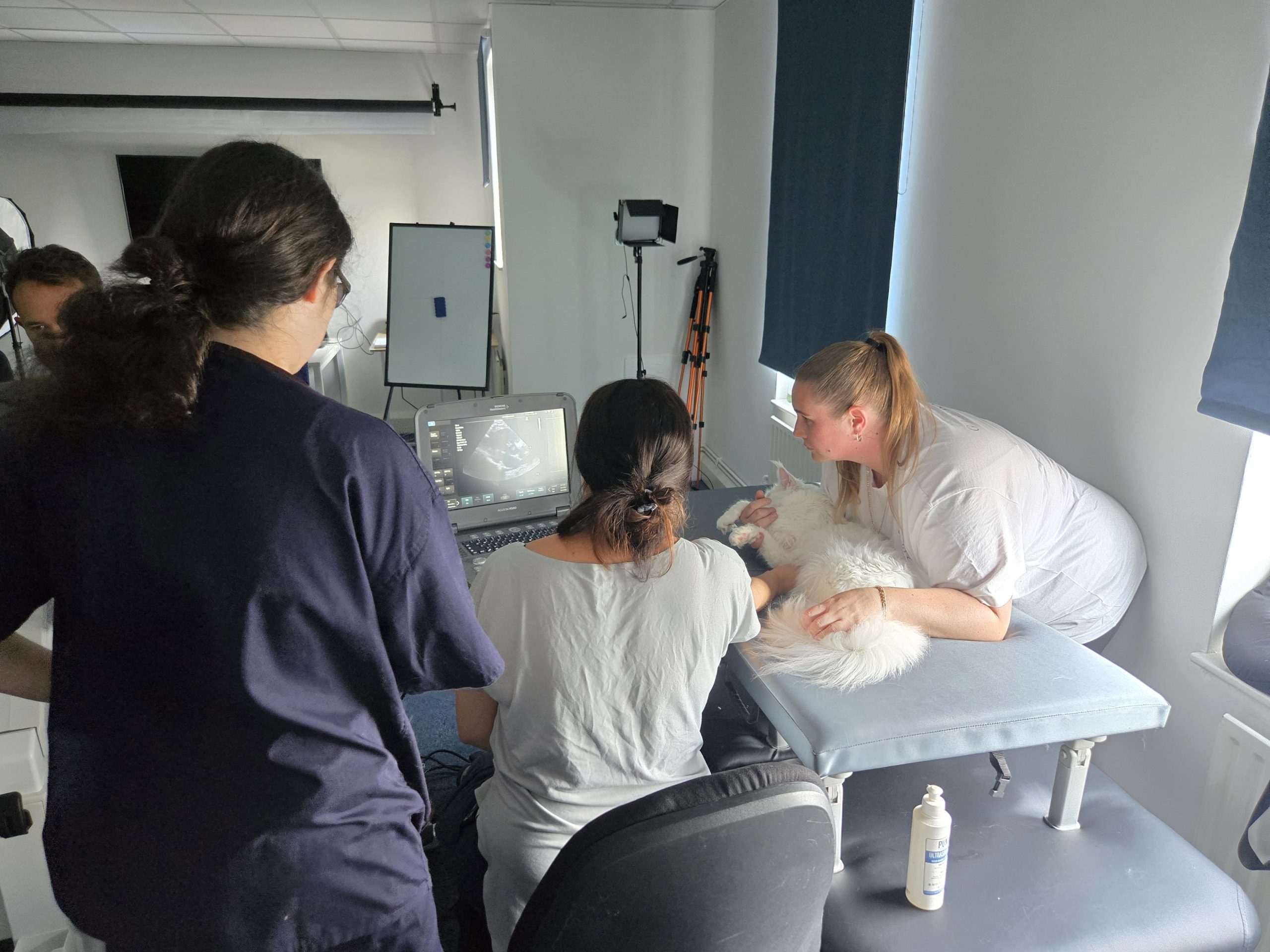
Below: Mavis came to our scan clinic in Bromley twice over the course of her pregnancy, and posed quite a challenge for sonographer Catherine (probe positioning when your client’s belly is almost touching the table is a new problem!). Watch some footage from her 30 day pregnancy confirmation scan:
The breeding community talks. Recommendations travel quickly, and so does a poor reputation. Clients who have done their research will want to know where you trained, and whether your qualifications come from an organisation with genuine standing in the field.
Training from a highly acclaimed organisation such as the Animal Ultrasound Association (AUA) signals to your clients that you have not simply watched a few online videos and bought a machine. AUA accreditation represents a commitment to rigorous, structured learning, ongoing professional development, and adherence to the highest standards of scanning practice. When a client sees that credential, they know they are in the hands of someone who has been properly trained and assessed.
This matters more than ever in a market where anyone can theoretically offer a scanning service with minimal investment or oversight. A discerning breeder, particularly one who has been let down by a substandard scan in the past, will actively seek out an AUA-trained scanner. Your accreditation is not just a qualification on a certificate. It is a marketing asset, a trust signal, and a professional differentiator that sets you apart from those operating without proper training.
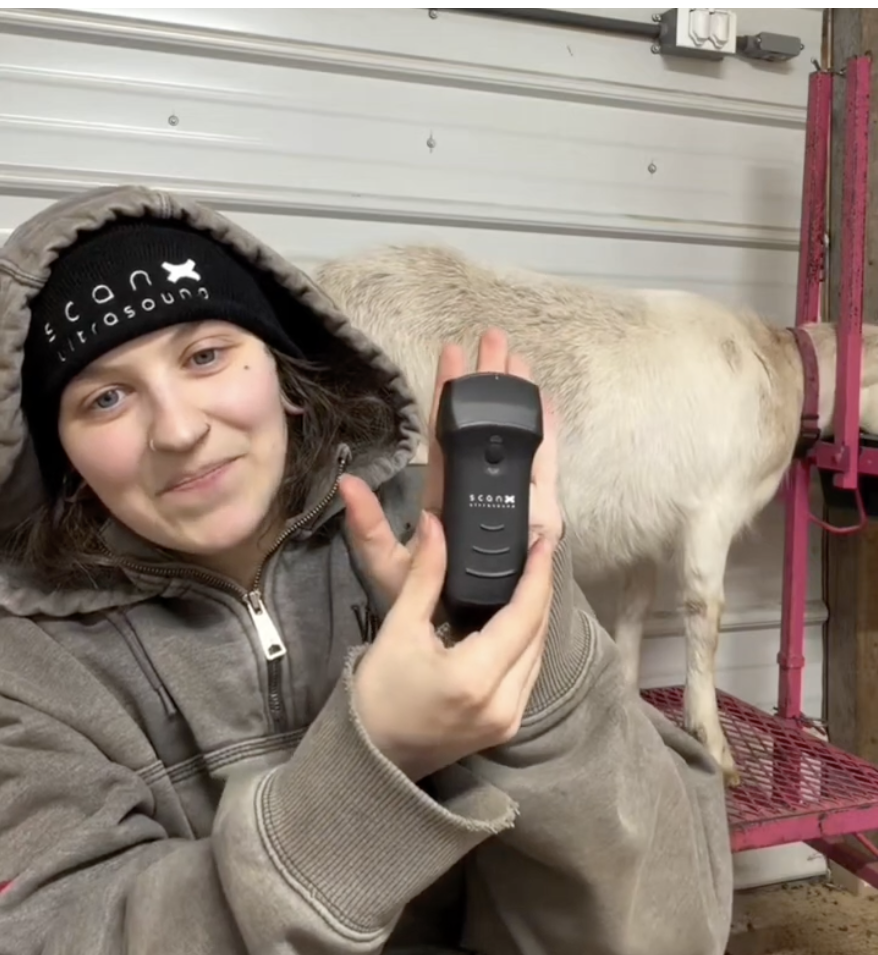
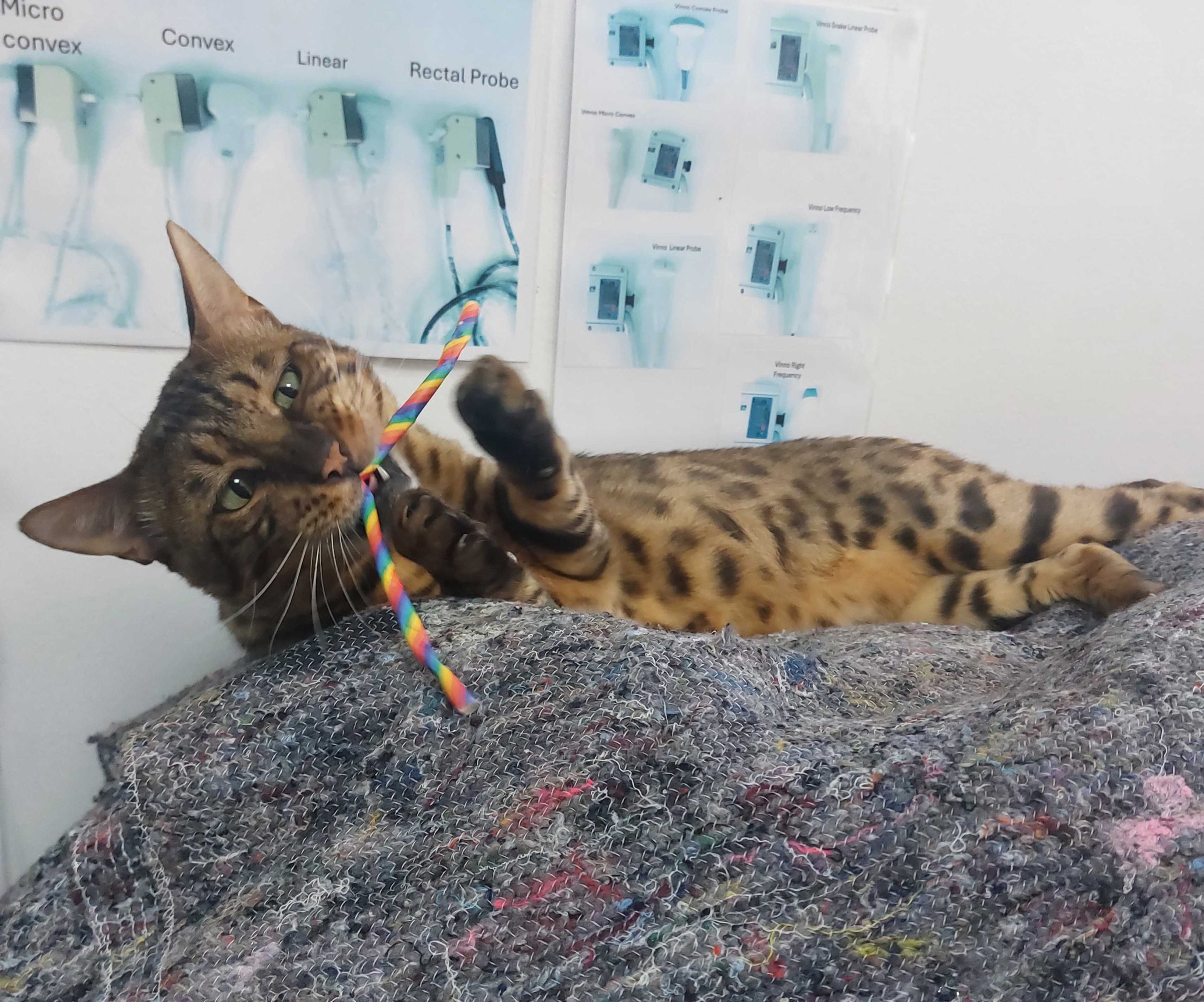
Alongside your training, the quality of your equipment is one of the first things a knowledgeable client will consider. A scanner who has invested in a high-quality, purpose-designed ultrasound machine is demonstrating something important: that they take their work seriously, and that they value the animals in their care.
Ultrasound has an excellent safety record, and this is largely because conscientious professionals use appropriate equipment, understand the physics behind it, and apply it correctly. When used at the right stage of gestation and at the correct power output settings, ultrasound causes no harm to the developing foetuses or their mother. However, this safety record depends entirely on the scanner understanding their equipment and using it appropriately. At certain stages of gestation, the developing foetus is more sensitive to heat, and a knowledgeable scanner will factor this into both the timing of their scans and their machine settings.
A cheap, poorly specified machine not only risks producing unclear or misleading images; it also raises legitimate questions about the scanner’s commitment to their craft. Clients who are price-shopping above all else may not notice the difference, but the clients you most want to attract, those who are serious about their breeding programme and the wellbeing of their animals, absolutely will.
One of the most compelling things you can offer your clients is continuity of care throughout the entire pregnancy. There is no fixed cut-off point for ultrasound, and your dog or cat can be scanned right up until she is due to whelp. Many breeders choose to have several scans performed at different stages, and it is not difficult to understand why.
Watching puppies or kittens develop between scans is a genuinely joyful experience. The visible growth from scan to scan is remarkable, and being able to share that with your client, whether that is the dam’s owner or the prospective new owners of the pups, is one of the most rewarding aspects of this work. Seeing a heartbeat on screen for the first time, or watching a puppy move and stretch in the womb, creates moments that your clients will remember and talk about. Those moments also build loyalty; a client who has shared that experience with you is far more likely to return for their next litter and recommend you to others in their breeding community.
Beyond the emotional dimension, sequential scanning serves a genuinely important clinical purpose. Regular monitoring helps track the health and development of the foetuses and keeps a close eye on the wellbeing of the mother. Having a baseline from earlier in the pregnancy makes it considerably easier to identify any changes or incidental findings that that need to be referred to a veterinarian as the pregnancy progresses.
Again, it is worth reiterating: if a client expresses concern about their pregnant pet at any point, they must be directed to a veterinarian. Your role as a paraprofessional scanner is to complement veterinary care, never to replace it.
A hallmark of a genuinely experienced scanner is the ability to manage client expectations with honesty and confidence. This is particularly relevant when it comes to litter size estimates. Ultrasound is notoriously unreliable at providing accurate puppy counts. The bitch’s uterus divides into two horns that frequently overlap and crisscross one another, making it extremely difficult to count individual foetuses with precision unless the litter is very small.
A scanner who confidently reels off a specific number, pointing at the screen and counting sacs one by one, is usually counting intestinal loops rather than gestational sacs, and is setting their client up for a mismatch between expectation and reality. No scanner should ever guarantee a definitive puppy count, and presenting an educated estimate as such is one of the clearest signs of inexperienced or unscrupulous practice.
Your clients may initially be disappointed if you cannot give them a precise number. But when you explain why, and do so from a place of knowledge and confidence, you reinforce your credibility. Clients who understand what good scanning practice looks like will respect your honesty far more than a confident but unfounded figure.
For paraprofessional scanners looking to build a genuinely comprehensive service, post-whelp scanning is one of the most powerful additions you can make to your offering, and it remains one of the most underutilised skills in the field.
A post-whelp scan allows you to confirm that the uterus is clear following delivery: a critical step in safeguarding the mother’s health. This non-invasive check can identify retained foetuses (whether viable or non-viable), retained placental tissue, and excessive uterine fluid or inflammatory changes. Left undetected, these conditions can lead to metritis, sepsis, or haemorrhage, all of which can escalate rapidly without timely veterinary intervention.
The value of this service to your clients cannot be overstated. Consider a Cocker Spaniel who delivered six healthy puppies, when the owner had been told to expect seven. Concerned about a possible retained pup, the owner sought a post-whelp scan. The scan confirmed no remaining foetuses, but did identify lochia (normal post-birth uterine fluid) in the uterine horn. The owner avoided unnecessary emergency veterinary fees, left fully reassured, and was given clear advice on signs of infection to monitor for in the coming days. That kind of outcome builds the sort of trust that generates referrals and repeat clients for years to come:
Above: A post-whelp scan on a Cocker Spaniel.
Offering post-whelp scanning also demonstrates something that discerning clients actively seek: continuity of care. If you have scanned the dam throughout her pregnancy, you already have a relationship with that animal and that owner. Being there at the end of the journey, as well as the beginning, is a mark of a truly professional and caring service. It reduces stress for the dam, who is in a familiar environment with a familiar handler, and it gives the owner support and reassurance at one of the most anxious points in the whole process.
The clients who will sustain and grow your scanning business in the long term are not those who choose you because you are the cheapest option available. They are the breeders who prioritise quality, who research their scanner’s credentials, who want to know that the person handling their animals has trained with a respected organisation like the AUA, uses equipment that is fit for purpose, and approaches their work with genuine professionalism and care.
This National Pet Month, it is worth asking yourself honestly whether your practice reflects the standard those clients are looking for. If it does, shout about it. Your training, your accreditation, your equipment, and your commitment to ongoing professional development are not things to be modest about. They are exactly what your best clients are looking for, and they deserve to know you have them.