One of the most common questions breeders ask is: “How accurate is ultrasound for counting puppies?” The interesting thing is that the answer often depends not only on the technology itself, but also on who you ask and where they are based.
Spend any time in breeder forums or social media groups and you’ll notice a striking divide. Breeders and scanners in the UK frequently report that ultrasound puppy counts are very accurate, while many breeders in the US are far more sceptical, often recommending X-rays instead. So who’s right?
The reality is that both experiences can be true.
Ultrasound Puppy Counts Are Always an Estimate
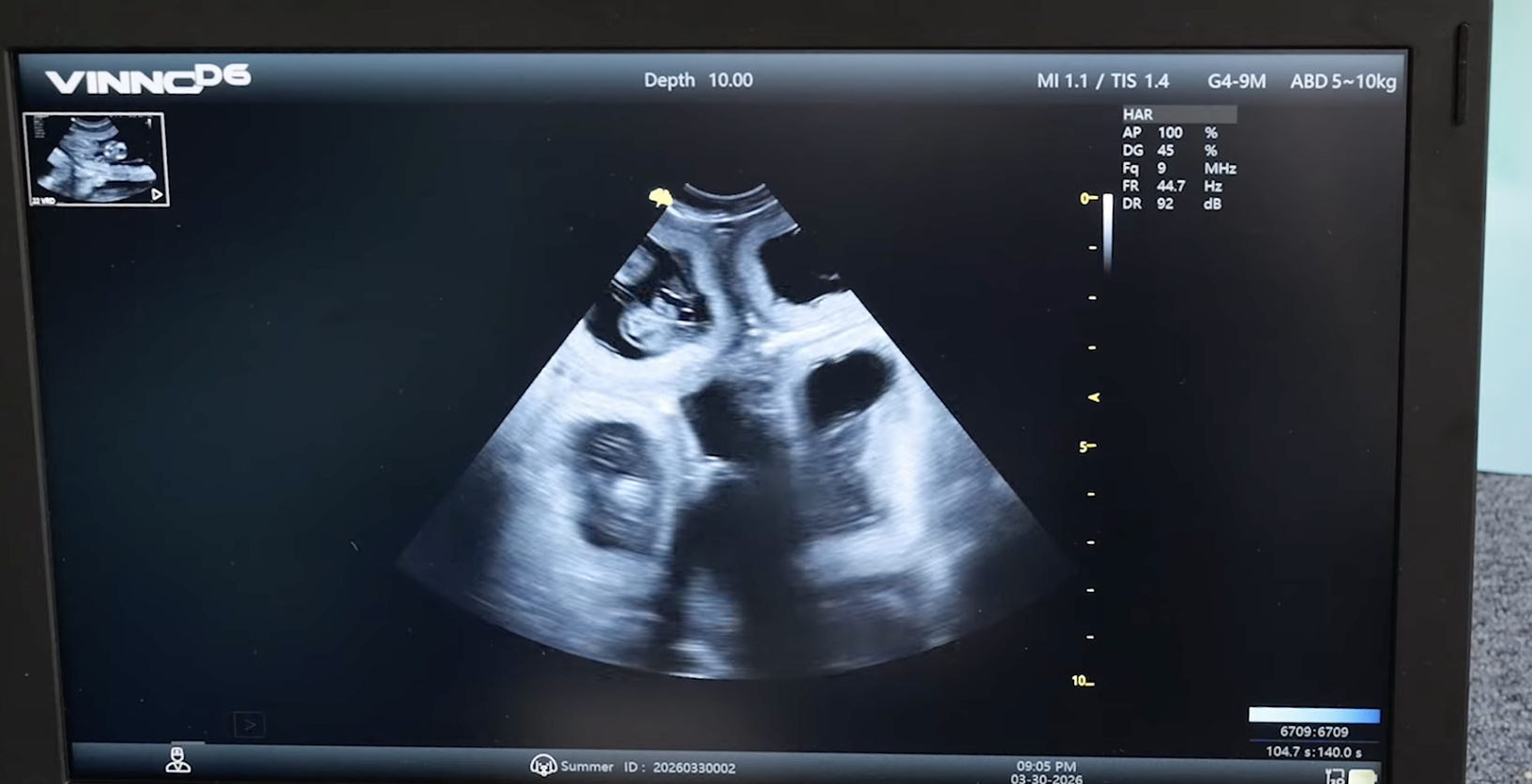
Let’s start with an important point: ultrasound should never be considered a guaranteed puppy count. Even with excellent equipment and an experienced operator, the number of foetuses seen during pregnancy scanning is an estimate of the puppies in utero, in view, at that moment. Puppies can overlap in the uterus, move position, or be hidden behind other structures during the scan.
However, that doesn’t mean ultrasound isn’t useful for estimating litter size. In fact, when performed correctly with appropriate equipment and by a trained operator, ultrasound can provide remarkably accurate estimates.
The key phrase there is: when performed correctly.
Why the UK and US Experiences Are So Different
One of the reasons opinions vary so dramatically is because the standard approach to pregnancy scanning differs considerably between countries.
In the UK, many breeders either:
As a result, many UK breeders report excellent experiences with puppy counts and pregnancy detection.
By contrast, in the United States, X-ray remains the preferred method for counting puppies in many veterinary practices. It also appears to be more common for breeders to purchase lower-cost ultrasound units online without receiving formal training or ongoing support. All of these factors naturally lead to different outcomes and it can only be expected that when someone has a poor experience with an entry-level machine, minimal guidance and limited scanning experience, it’s understandable that they conclude ultrasound is inaccurate.
Meanwhile, someone using high-quality equipment with adequate training may confidently estimate litter sizes with impressive consistency.
The Three Factors That Matter Most
1. Equipment Quality- not all ultrasound machines are created equal.
Image quality is absolutely critical when identifying and differentiating multiple foetuses, particularly in larger litters or at earlier stages of gestation. Poor image resolution can make it difficult to distinguish individual puppies, increasing the likelihood of undercounting or uncertainty.
At ScanX, we only sell equipment that has been reviewed and approved by our own sonographers and echocardiographers to ensure that the image quality is appropriate for, or far exceeds, the standard required for pregnancy detection. We’re confident in the machines we supply, but we also know that equipment alone is not enough.
2. Training- a high-quality scanner in inexperienced hands will never perform to its full potential.
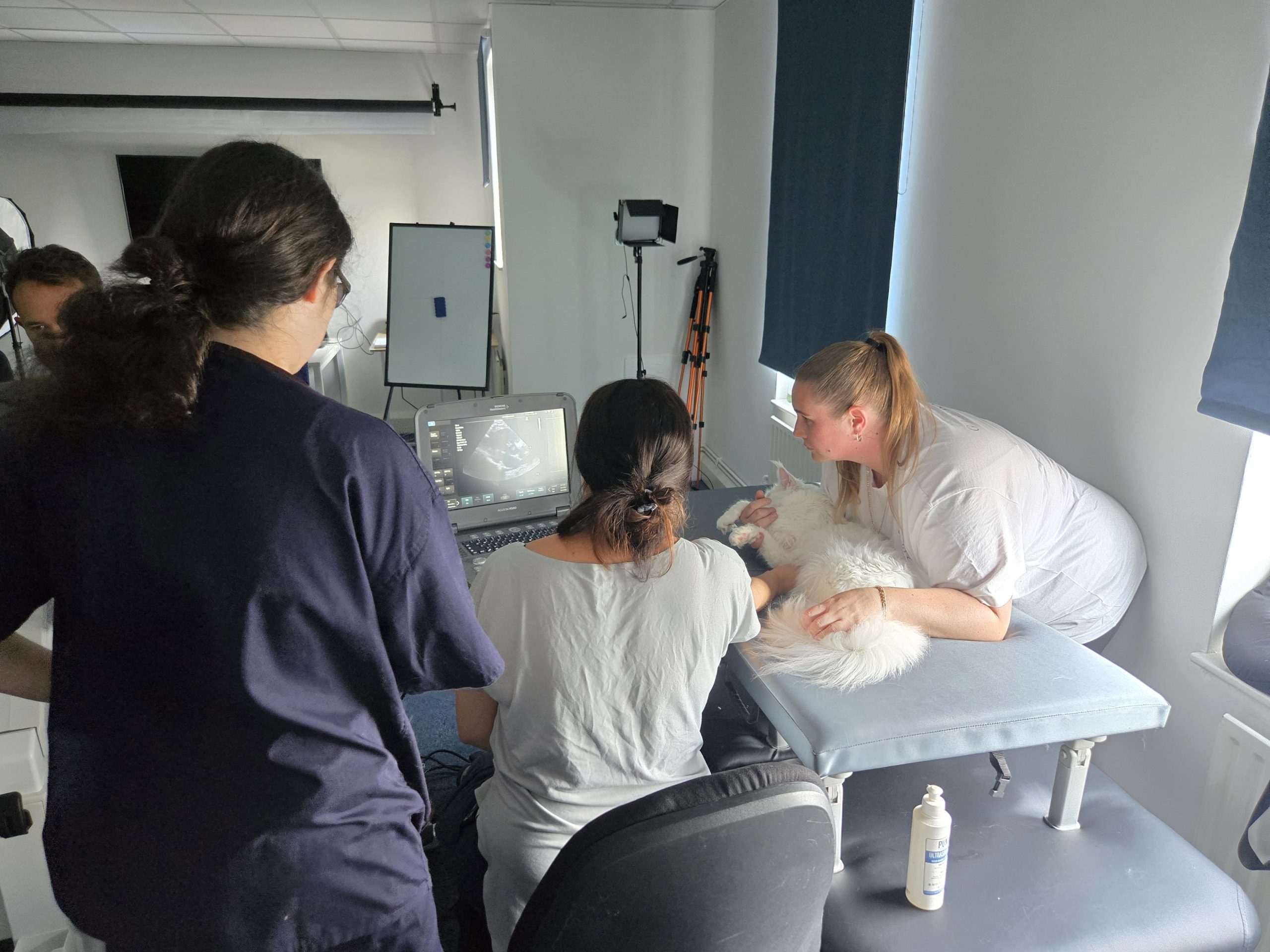
Learning how to position the probe correctly, orientate using anatomical landmarks, recognise foetal structures, perform measurements and systematically scan the uterus all make a significant difference to the quality of the examination.
This applies to everyone; breeders need training, paraprofessional scanners need training and veterinarians (often) need additional training too. It’s important to remember that a veterinarian is not automatically an expert in pregnancy ultrasound upon graduation- like any discipline, pregnancy scanning requires practice, experience and ongoing learning. In fact, a vet who rarely performs pregnancy scans may be less confident or less accurate than a dedicated breeder or scanner who performs them regularly and has received focused training.
3. Experience- ultrasound is a skill that is developed.
The more scans a person performs, the better they become at identifying puppies, understanding normal variations and avoiding common pitfalls. This is one reason experienced pregnancy scanners often achieve excellent results- they develop a systematic approach and become adept at interpreting what they’re seeing on screen.
Experience also teaches an important lesson: there is a difference between estimating a litter size and guaranteeing one. No responsible scanner should promise an exact number of puppies.
Is X-ray Better Than Ultrasound for Counting Puppies?
This is another common question.
X-ray can be extremely useful for counting puppies, particularly in late pregnancy when the foetal skeletons are fully mineralised and easy to visualise. However, X-ray and ultrasound serve different purposes.
Ultrasound excels at:
- Early pregnancy detection.
- Assessing foetal viability.
- Observing heartbeats.
- Monitoring development during pregnancy.
- Providing an estimate of litter size.
While x-ray excels at counting mineralised skeletons later in gestation which helps breeders prepare for whelping by confirming how many puppies are expected. Breeders choose to use one or both methods depending on their needs.
The Most Important Takeaway
So, is ultrasound accurate for counting puppies? The answer is: it can be very accurate, but accuracy depends heavily on the equipment, the training and the experience of the person performing the scan.
This is why experiences vary so widely between individuals, clinics and even countries.
At ScanX, we’re passionate about helping breeders and professionals achieve the best possible results. That’s why we don’t simply supply ultrasound equipment- we carefully select machines that meet the standards required for reliable pregnancy detection and support users with the training and guidance needed to get the most from them.
Because even with outstanding equipment, estimating the number of foetuses in utero is always an estimate and never a guarantee.