Did you know?
Did you know that guinea pigs are classed as exotic animals in veterinary medicine, and live on average for five to seven years?
Despite this, they are still widely viewed as inexpensive children’s pets. Their low purchase price feeds the damaging misconception that they are easy, cheap and disposable. Sadly, this belief is contributing to a significant increase in guinea pig abandonments and rescue admissions across the UK.
Guinea pigs are not “cheap pets”
Guinea pigs require the same standard of veterinary care, welfare planning and insurance as any other animal. Their exotic status means that not all veterinary practices are equipped to treat them. Those that are have invested in specialist training and imaging equipment, and that is reflected in consultation fees.
Insurance is strongly advised because conditions such as dental disease, respiratory infections and ovarian cysts are common yet entirely treatable. Without cover, these issues can become costly or lead to difficult decisions.
Housing is another underestimated factor. Guinea pigs are prey animals and their stress levels, immune function and behaviour are closely tied to their environment. They need secure indoor or insulated outdoor housing year-round, constant access to hay and fresh forage, and enrichment that mimics natural behaviours such as foraging and tunnelling.
Companionship, welfare and rescue statistics
Guinea pigs are highly social herd animals and should never be housed alone. A bonded pair or harmonious group is considered best practice for emotional wellbeing. Once you factor in nutrition, enrichment, veterinary care, insurance and housing for multiple animals, guinea pigs are clearly not a low-cost option.
These challenges are reflected in rescue data. In 2023, the RSPCA recorded a 37 percent rise in guinea pigs entering its care, with 237 surrendered between January and August, almost matching the total for all of 2022. As of September 2025, over 370 had been abandoned in nine months, a 34 percent increase on the same period in 2024. Between January 2021 and August 2024, more than 1,600 guinea pigs were reported abandoned to the charity. Some RSPCA branches in 2025 have reported a 40 percent surge in intakes and are operating at capacity due to large multi-animal cases. In total, an estimated 250,000 animals enter UK rescue centres each year, and a significant proportion are small pets.
What small animals can teach us
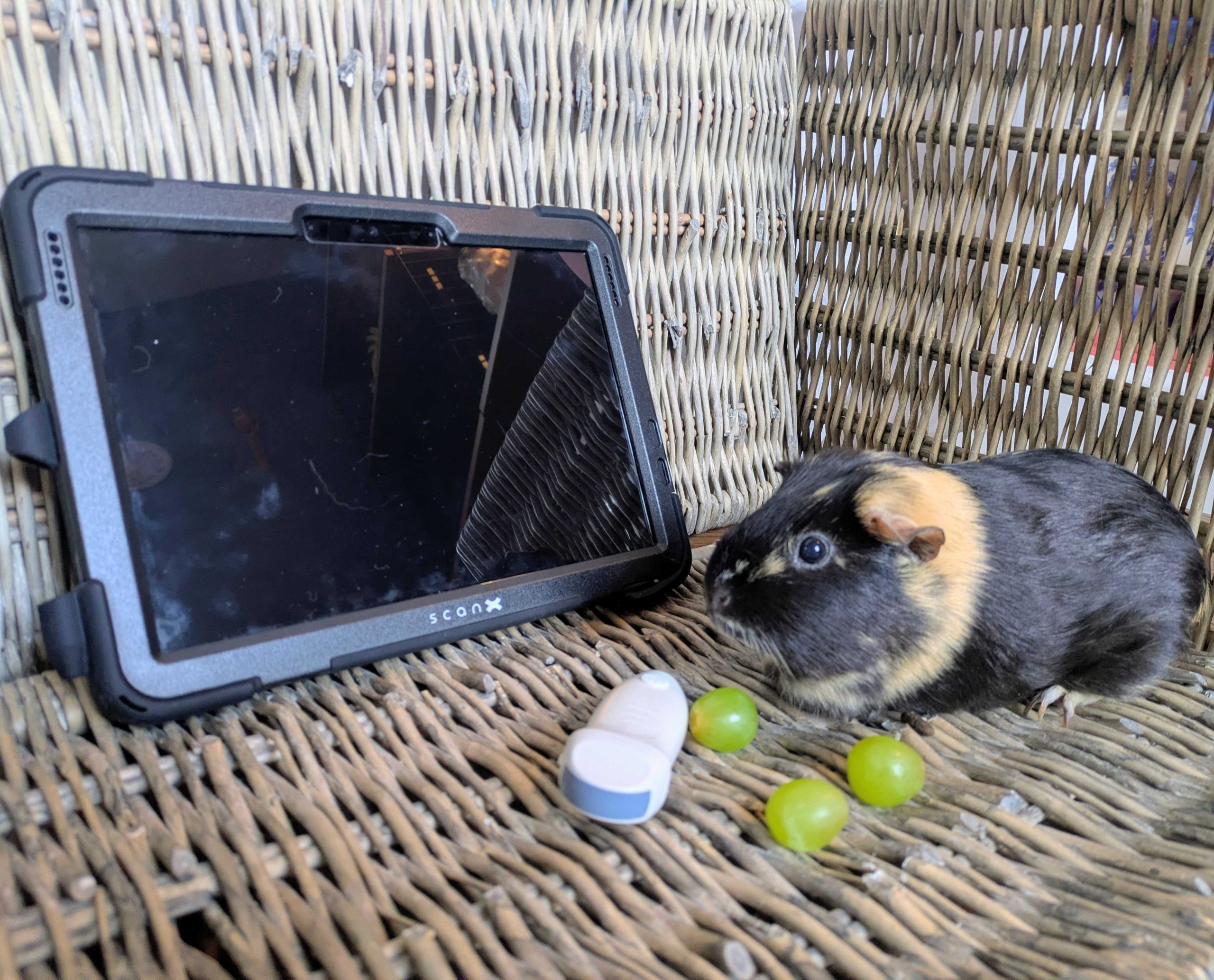
It is sad that such friendly, gentle and affectionate animals are so often disregarded because they are inexpensive to buy and easy to breed. At PUM, guinea pigs have played an unexpected role in improving care for small animals. Catherine has welcomed many guinea pigs into scan trials to test clarity and usability across different ultrasound systems. They were calm, patient and always rewarded generously with hay and leafy greens.
You may remember our visit to Herbie Hedgehog Rescue. The young hedgehogs there benefitted directly from Catherine’s work on the ScanX ultrasound machine. When developing the ScanX, one of her priorities was that it should be adaptable for a wide variety of species; tiny animals such as guinea pigs and hedgehogs need specialist veterinary imaging in cases of illness and injury, and this level of care simply cannot be provided with machines designed only for larger patients. Improved imaging translates to quicker examinations, reduced stress and faster diagnosis, all of which increase the chances of rehabilitation or successful treatment.
Every animal deserves proper care
A pet is a long-term commitment measured in welfare, not purchase price. Guinea pigs are intelligent, social animals with complex medical and emotional needs. Their wellbeing depends entirely on the people who choose to keep them. By treating small animals with the same seriousness as larger pets, and by ensuring access to specialist veterinary care, insurance, enrichment and suitable housing, we can reduce abandonment rates and give these charming creatures the lives they deserve.